
About this case study
Heat
Business, communities, government
Community engagement
We can’t bake climate resilience. But we can create the conditions for it to rise.
A Recipe for Resilience in the Hunter was a creative, place-based workshop in the Hunter Region for business, government and community leaders to discover shared purpose and organise into new micro-communities working towards a circular and resilient future.
‘I believe that the process of art making and getting involved in creativity helps us think outside the box...it helps people connect and engage in new ways.
Doing this pilot workshop with CELL has inspired us to redevelop our business model to be more accessible for corporates and business professionals while remaining fun, engaging and creative’
- Alanya van de Weil, New Artists' Collective - workshop participant
Climate adaptation workshops often focus on plans, policies and sticky notes. The Recipe for Resilience – Hunter Region workshop started with a different ingredient: creativity.
Fifteen leaders from a variety of industries and backgrounds – from creatives to councillors, researchers to recyclers – gathered in Lake Macquarie on Awabakal Country in June 2026 to explore how they could strengthen collaboration and accelerate climate adaptation.
Co-designed by the Circular Economy Living Lab and its partners – Regen Labs, AdaptNSW, New Artists’ Collective and ReNewy Living – the workshop used a simple cake metaphor to help participants discover shared purpose and organise into three new micro-communities.
A region with all the right ingredients
The Hunter Region is rich with people, organisations and businesses already contributing to a circular and climate-resilient future. But connecting and supporting growing interest from businesses, researchers, community organisations and government is an ongoing challenge for convenors, like Samantha Bourke, Circular Lead for the Circular Economy Living Lab.
“People were already motivated to act, but they needed a practical way to find others working towards the same goals,” Samantha says.
The Recipe for Resilience workshop emerged from this insight: an engaging, time efficient approach that used creative practice to catalyse collaborative action.
Growing international evidence recognises arts and culture as valuable contributors to climate adaptation and community resilience. The World Health Organization has found creative practice can help communities to understand complex climate challenges, navigate ethical dilemmas, strengthen social connection, trust and collective agency, and imagine future possibilities and organise around shared action.
“Artistic and creative processes can help communities reflect, connect and respond to change in ways that complement scientific, technical and policy responses,” Samantha says.
The method behind the metaphor
The Recipe for Resilience workshop invited participants to “bake” a shared vision for a circular and resilient Hunter Region.
Using a simple cake recipe metaphor, each layer represented an ingredient needed for long-term resilience: values, strengths, future vision, capabilities and one significant opportunity for collective action.

Participants worked through a series of creative activities.
Connecting: On arrival participants received an “ingredients bag”. Through a series of short conversations they shared what they loved about the Hunter Region and discovered the breadth of experience already present in the room.
Surfacing the layers: Each participant reflected on four questions:
- What values guide your work?
- What strengths already exist in the Hunter?
- What future vision do you want to help create?
- What skills and capabilities can you contribute?
Participants recorded their responses on the colour-coded “ingredients” from their bag, before placing their highest priorities into shared mixing bowls. The process combined ideas and people, giving equal weight to every contribution and helping participants see patterns.
Clustering visions: Facilitators grouped participants according to their future visions to bring people pursuing similar aspirations for the Hunter Region together.
Forming micro-communities: Participants began exploring shared possibilities with people they had often never met, despite working towards closely aligned goals.
Making the cake: Each micro-community developed its own recipe for resilience. Using a cake worksheet, participants identified shared values, strengths, capabilities and opportunities before agreeing on practical next steps and how they would stay connected after the workshop.
Each group presented its completed cake and shared its collective opportunity with the room. Together, the cakes created a visual picture of a region already rich in ideas, capability and commitment.
The cake concept worked “exceptionally well”, one facilitator reflected. “Using colour-coded ingredients gave participants confidence in the process, reduced confusion and encouraged greater care, commitment and thought. The bowls helped people navigate the framework naturally before bringing their ideas together into a shared picture.”
Fresh from the oven
The workshop produced three new micro-communities, each organised around a shared vision for the Hunter Region. These communities are focused on:
Building unity across local government by strengthening collaboration, communication and awareness of work already underway.
Strengthening trusted connections across sectors including government, community and academia, creating new opportunities to deepen relationships and collaborate around shared challenges.
Creating a circular learning hub to connect industry leaders, entrepreneurs, researchers and young people, making local expertise more visible while supporting businesses to embrace circular practices.


The Circular Economy Living Lab is now supporting each micro-community through follow-up conversations, helping participants translate early momentum into practical collaboration while inviting others from across the Hunter Region to contribute.
A recipe worth sharing
Climate adaptation depends on more than infrastructure, technical expertise and planning. It also relies on communities having the relationships, trust and capacity to work together as conditions change.
Using a visual and tactile process, the Recipe for Resilience workshop strengthened this social infrastructure by helping people discover shared purpose and organise around common goals. Participants left with new relationships, a clearer understanding of where their work connected with others, and a renewed commitment to climate adaptation.
For the Circular Economy Living Lab, the workshop tested and built a new way of working. Rather than responding to individual enquiries one at a time, the Circular Economy Living Lab can now support groups of people already aligned around common aspirations.
For Samantha Bourke, this shift is profound. “Convenors do not need to hold every conversation or lead every initiative. Their greatest contribution may be creating the right conditions and frameworks for communities to organise themselves,” she says.
Sharing the recipe card for other communities
While every community will develop its own version of the Recipe for Resilience, the Hunter Region workshop identified five design principles that other communities can be adapted to almost any place.
1. Design for participation
People contribute differently when they are making, discussing and building something together. Creative practice encourages conversation, curiosity and shared ownership from the beginning.
2. Make complexity tangible
Climate adaptation and the circular economy involve interconnected complex systems, motivations and visions. Visual and hands-on activities help people explore those interconnections without oversimplifying issues.
3. Organise around shared visions
People organise around the future they want to create, rather than the organisations they represent. Shared purpose is the foundation for collaboration across sectors.
4. Work with local creative practitioners and trusted convenors
Local artists, facilitators and community leaders bring inside knowledge, strengthen community ownership and create experiences that reflect the unique place and people who live there.
5. Support what happens next
A workshop is just the beginning. Supporting emerging groups after the event, and providing opportunities for more people to join, helps translate enthusiasm into ongoing collaboration and practical action.

Rising to the challenge
Every community brings its own ingredients: its own history, priorities, people and challenges as the climate changes.
Recipe for Resilience provides the method. By using creative practice to help people discover shared purpose, organise around opportunities and build momentum, the approach can be adapted to almost any community challenge.
The goal may be a circular economy initiative, a stronger food system or post-disaster recovery. The ingredients may change, but the recipe stays the same: bring the right people together to rise to the challenge.
“I'm excited to see that small, creative, place-based workshops can rapidly form micro-communities that turn shared challenges into coordinated action.”
Dimity Podger, Director, Regen Labs
Case studies
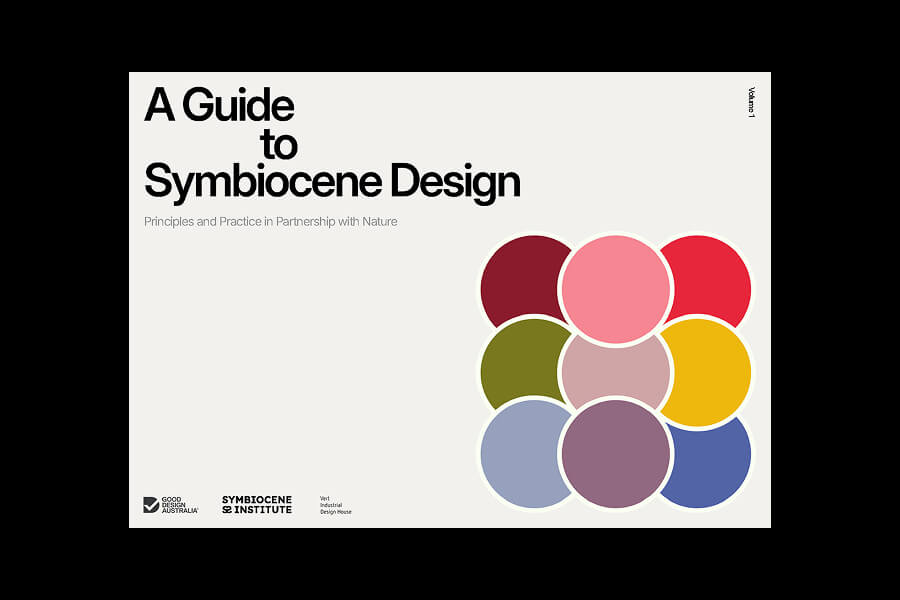
What if the future begins with a new word? The Symbiocene offers a practical philosophy for designing relationships where people and nature thrive together.

Before communities can shape adaptation plans, they need opportunities to talk about what adaptation means to them. Adaptation Stories uses storytelling to start those conversations across the Northern Rivers.

The case study outlines research led by the University of Tasmania with NSW Government agencies assessing air quality improvements in the Port Macquarie public library during smoke from the 2019–2020 fires. It compared central air conditioning with portable HEPA cleaners to evaluate the library’s potential to operate as a community clean‑air shelter.