Key points
- The Illawarra Shoalhaven region has thriving industries including hospitality, tourism, education, manufacturing, agriculture, fisheries and international shipping trade.
- Climate change is affecting the Illawarra Shoalhaven region, particularly through increasing temperatures. Projections show temperatures are expected to keep rising, sea levels will rise, rainfall patterns will change and fire weather will increase.
- The NSW Government is helping the Illawarra Shoalhaven region adapt to climate change through the Enabling Regional Adaptation work. This is being achieved by working with state and local government stakeholders to identify key aspects of the Illawarra Shoalhaven region that are vulnerable to climate impacts, along with challenges and opportunities to adapt.
Importance of the Illawarra Shoalhaven region








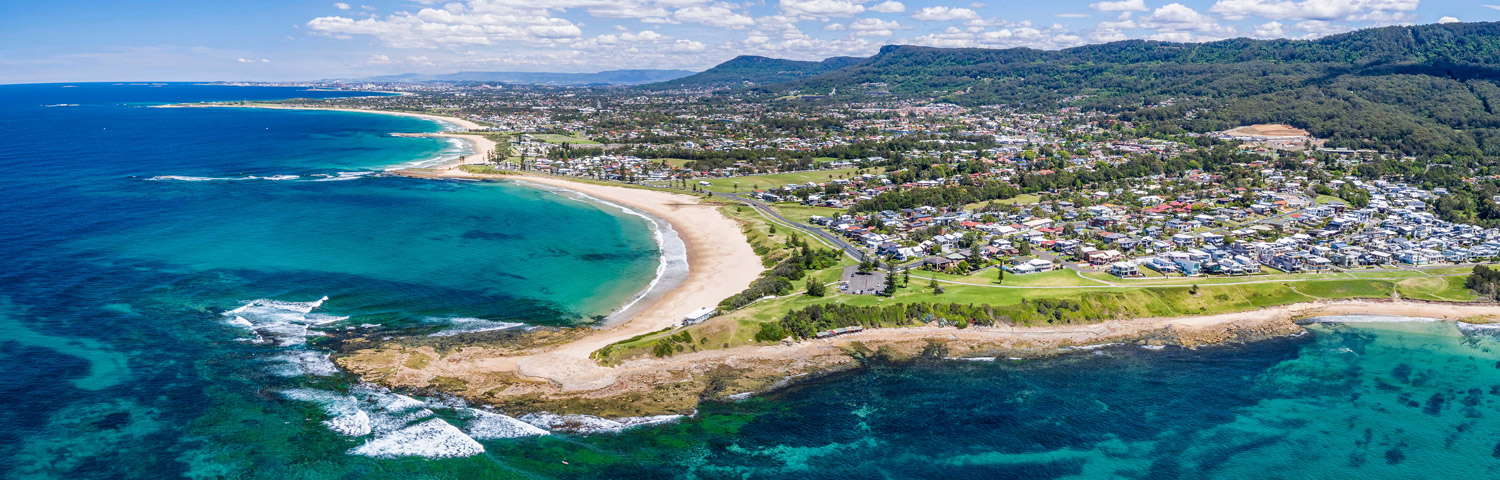
The Illawarra Shoalhaven region encompasses the traditional lands of the Wodi Wodi, Wandandian, Yuin and Murramarang peoples. The Illawarra Shoalhaven region is south of Sydney and is home to regional cities, commercial hubs and settlements, including Wollongong, Shellharbour, Kiama, Nowra and Milton-Ulladulla. The region contains unique natural features and is the backdrop to a mix of coastal, urban and rural lifestyles.
Its population has a higher proportion of older residents compared to the NSW and ACT average.
The region contains unique natural features. The coastline stretches 200 km from the Royal National Park south of Sydney, down to Durras Lake. The Illawarra Range escarpment is 120 km long and separates the coastal plains in the east from the rolling hills of the Southern Tablelands in the west.
The geography of the area affects local weather conditions, which together have led to a range of unique and important ecosystems. These include rainforests and tall eucalypt forests along the Illawarra Escarpment, dry sclerophyll forests on sandstone plateaus and tall open forests on the coastal plain.
The Illawarra Shoalhaven region supports a diverse range of industries that are vital for NSW’s economy, with the highest number of businesses in construction, specialised services (professional, scientific and technical), health care and social assistance as well as property and rental services. The largest industries of employment for the region are health care and social assistance, construction, education and training, retail trade, and public administration and safety.
These cultural, environmental and economic values are just some aspects of the region which have been identified as being highly vulnerable to climate change. Climate change is already affecting the Illawarra Shoalhaven region. The impacts of this can be seen through the widespread bushfires of 2019–2020 and the floods that followed across the region.
The region’s climate has provided the foundation for many of the region’s current social, ecological, and economic systems. Now, climate change is altering these foundations, with impacts already visible and expected to grow as they are impacted by increased temperatures, more hot days, fewer cold nights, higher rainfall variability and greater fire danger.
How the Illawarra Shoalhaven is affected by climate change
NARCliM2.0 climate projections at a glance

Climate projections for the Illawarra Shoalhaven are shown relative to a baseline. This consistent reference point (the baseline) avoids the problems that could occur if future projections are measured against a shifting point of comparison, such as a constantly moving 'current' period.
- The baseline period: the modelled average of the 20-year period between 1990-2009.
- Middle of the century (2050): the projected average of the 20-year period between 2040-2059.
- End of the century (2090): the projected average of the 20-year period between 2080-2099.
Detailed information on the projected climate changes for the region can be found in the Illawarra Shoalhaven snapshot or can be explored further through the Interactive climate change projections map.
Projections for the Illawarra Shoalhaven






Temperature
Across the Illawarra Shoalhaven region, average temperatures are projected to rise throughout this century under all emissions scenarios. The main difference between scenarios is the scale of change: lower emissions show slower and more moderate increases, while higher emissions lead to a greater and ongoing rise in average temperature.
Under a low-emissions scenario, the rate of average temperature increase is expected to slow around the middle of the century. Under medium- and high-emissions scenarios, temperatures are expected to keep climbing past the middle of the century with no sign of levelling off by the end of the century, with faster and greater increases under a high-emissions scenario.
Hot days
Across the Illawarra Shoalhaven region, the number of hot days is projected to increase throughout this century under all emissions scenarios. The main difference between scenarios is the scale of change: lower emissions show slower and more moderate increases, while higher emissions lead to a greater and ongoing rise in the number of hot days.
Under a low-emissions scenario, the rate of increase is expected to slow around the middle of the century. Under medium- and high-emissions scenarios, the number of hot days is expected to keep rising past the middle of the century, with no sign of levelling off by the end of the century, with faster and greater increases under a high-emissions scenario.
| Case study Significant population growth is expected in the Illawarra Shoalhaven region in the coming decades, from a population of around 860,000 people in 2021 to nearly 950,000 people by 2041. The Illawarra region, with its aging population, faces significant impacts from an increase in the number of hot days. Older people have less ability to handle hot days, due to factors often associated with aging, such as poor fitness fitness, body changes and long-term health problems. This makes them more likely to suffer from symptoms of heat strain, such as a faster heart rate, higher body temperature and laboured breathing. |
Cold nights
There will be noticeably fewer cold nights in the Illawarra Shoalhaven region this century. The main difference between scenarios is the pace and size of the decline: lower emissions slow the change, while higher emissions lead to faster and greater losses.
Under a low-emissions scenario, the decline of cold nights slows around the middle of the century. Under a medium- and high-emissions scenarios, the number of cold nights continues to decline past the middle of the century, with no sign of levelling off, and by the end of the century the region could have very few, if any, cold nights under a high-emissions scenario.
Rainfall
Annual average rainfall in the Illawarra Shoalhaven region is projected to remain variable throughout this century but is projected to decline under all emissions scenarios. The main differences between scenarios are in how large the reductions are and when they occur.
By the middle of the century, the high-emissions scenario shows a noticeably greater drop in annual rainfall than the low- and medium-emissions scenarios. By the end of the century, the differences between scenarios change their behaviour, rainfall continues to decline under the low- and medium-emissions scenarios, while the high-emissions scenario shows a slight increase in rainfall from the middle of the century but still remains below current levels.
Severe fire weather
Across the Illawarra Shoalhaven region, the number of severe fire weather days is projected to rise throughout this century under all emissions scenarios. The main difference between scenarios is the scale of change: lower emissions show slower and more moderate increases, while higher emissions lead to a greater and ongoing rise in number of severe fire weather days.
Under a low-emissions scenario, the rate of increase is expected to slow around the middle of the century. Under medium- and high-emissions scenarios, severe fire weather days are expected to keep climbing past the middle of the century with no sign of levelling off by the end of the century, with faster and greater increases under a high-emissions scenario.
| Case study The 2019–20 bushfire season caused extensive damage to communities, infrastructure and natural ecosystems in the Illawarra Shoalhaven region. Over 320,000 hectares of the region were burnt and 10,880 buildings were impacted, including 286 homes which were destroyed. There were 23 premature deaths, as well as 30 cardiovascular disease and 107 respiratory disease hospitalisations across the region from poor air quality caused by the bushfires. Large areas of bushland experienced extreme fire severity, including Conjola National Park and Morton National Park. Approximately 80% of Morton National Park was burnt in the fires. |
Projected sea-level rise and coastal hazards
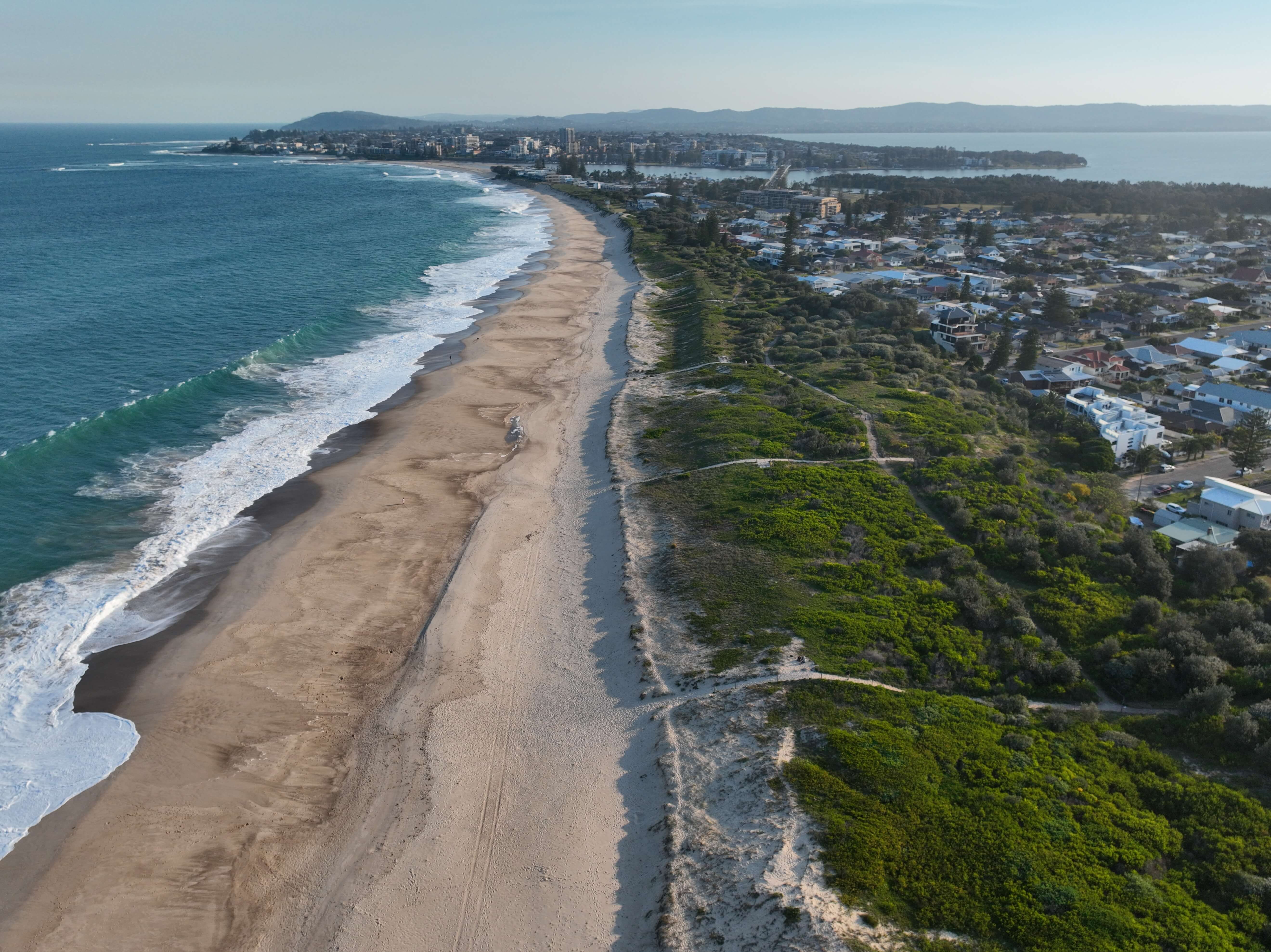
Sea level in the Illawarra Shoalhaven region is projected to continue rising under all emissions scenarios. At Port Kembla - the nearest location with available projection data - sea level is projected to rise by 11–24 cm under a low-emissions scenario (SSP1-2.6) and by 16–28 cm under a high-emissions scenario (SSP3-7.0) by 2050.
Later in the century, the rate of sea-level rise is expected to accelerate under both scenarios, with significantly faster increases under high emissions. By 2100, sea level is projected to rise by 23–56 cm under a low-emissions scenario and 50–91 cm under a high-emissions scenario.
These projections are relative to the 1995–2014 baseline and are based on data from the Intergovernmental Panel on Climate Change (IPCC) Sixth Assessment Report. Further details on the methodology and full set of projections are available through the IPCC Sixth Assessment Report and the NASA Sea Level Projection Tool.
The Illawarra Shoalhaven region is expected to face increasing exposure to coastal hazards over time, particularly under higher emissions scenarios. These hazards include coastal erosion, estuarine inundation, and coastal overwash.
Communities, infrastructure, and natural ecosystems are projected to become increasingly vulnerable to the impacts of sea-level rise and associated coastal hazards, especially under a very high-emissions scenario (SSP5-8.5).
Learn more about the impacts of sea-level rise and coastal hazards by accessing the coastal hazards snapshots and technical assessment report.
Adapting to changes in the Illawarra region
To help the Illawarra region adapt to the impacts of climate change, over 60 state and local government stakeholders were brought together in 2017 as part of the NSW Government’s Enabling Regional Adaptation work.
These participants collaboratively identified how different economic, sociocultural and environmental aspects (also known as systems) in the region are vulnerable to climate change. For each of these systems, the vision for a climate-resilient future was identified, and opportunities for action were co-designed. These opportunities can be implemented by state and local government, businesses or community groups.
The Shoalhaven and Illawarra region Enabling Regional Adaptation report provides a resource for state and local government and regional communities to understand how climate change will continue to impact the region and our values. It also provides potential opportunities for governments, businesses and communities to adapt to climate change.
The following opportunities for action reflect potential options for state and local government, businesses or community groups to implement. This list has been summarised from the Shoalhaven and Illawarra Enabling Regional Adaptation report. These opportunities provide a starting point for action, and will be reviewed and updated to ensure they continue to reflect climate trends, key vulnerabilities and community values.
Vision
Communities in isolated satellite settlements, such as Jamberoo, Hyams Beach and Calderwood are less vulnerable to extreme climate events, by having a sustainable built environment, integrated transport options and diversified employment. These communities are highly responsive and resilient to natural disasters and supported by access to real-time emergency service information. Communities are supported to value and protect their environmental, social and economic assets.
Opportunities for action
- Create and support community-driven solutions that promote resilience in social infrastructure, food, water, energy and transport.
- Encourage improved planning, design and development that is resilient, maximises natural capital and preserves biodiversity.
- Develop new business models for small to medium enterprises and local services to match seasonal tourism demand.
- Introduce improved public transport options such as cooperatives and autonomous vehicles to support an ageing population.
Vision
The transport system supports the socio-economic development of local communities and tourist destinations by using and improving access to a central rail network and alternative transport options. Effective planning and access reduce the need to travel for work. The transport system is sustainable and creates new styles of employment with reduced carbon emissions.
Opportunities for action
- Develop ‘live-work-play’ villages through improved land-use planning to reduce the need for long-distance commuting.
- Improve coordination of transport options to well-serviced hubs, for example by providing adequatecapacity trains, parking options and communal vehicles.
- Identify and explore options to strengthen critical transport pathways and include new urban development in forward planning for transport.
- Develop innovative technologies to reduce transport emissions.
- Promote and support alternative transport options such as autonomous bus services, Albion Park air services and local sea transport.
Vision
The water system supports and secures water for human use, biodiversity, recreational activities and industries. Water infrastructure is resilient and meets future demands in the region. The stormwater system integrates water re-use by industry, and the system is equipped to deal with extreme climate events.
Opportunities for action
- Create incentives for water sensitive urban design and to manage demand, to improve the efficiency of the water system and reduce the need for future changes.
- Create plans for the protection, relocation and renewal of sewer and stormwater infrastructure to suit changing climate conditions.
- Improve weather predictions, monitoring and communication to support early responses to extreme weather events.
- Promote and support the use of green infrastructure as an alternative to hard engineered systems.
Vision
The region’s industry is competitive, underpinned by advanced manufacturing and local knowledge services, and employs a local, skilled workforce. Port Kembla is the centre of a vibrant marine tourism sector and is a major international hub for commodities and containers supported by road and rail infrastructure that is resilient to climate impacts. The region’s industry and port are viable over the long term.
Opportunities for action
- Develop and prove a business case for improved rail infrastructure to improve freight and passenger access to the port.
- Work with industry to develop strategies for net zero emissions, reduced energy costs and access to energy demand management revenue.
- Develop and implement a strategy for marine tourism in the region.
- Develop formal training to build the skills base needed for industrial transformation.
Vision
The energy system has transitioned successfully from its current centralised system to a system where energy is reliable, sustainable and resilient to climate change impacts. Energy is supplied through a super-intelligent grid to communities in an equitable way.
Opportunities for action
- Establish community renewable energy and battery storage (domestic and regional) to meet peak energy demand.
- Incorporate BASIX+ into early planning and development control plans for new subdivisions.
- Establish an energy dashboard for local government, showing joint bulk buying, community and household renewable energy levels and joint council energy generation.
- Encourage and invest in research and development of innovative energy solutions.
Vision
Local food production, agriculture and food businesses are supported to provide access to healthy, nutritious food produced with a small ecological footprint. The food system supports local production through the protection of agricultural lands, environmental values and planning policies. Local economies diversify through food and farm tourism enterprises, and support for agriculture increases through an active social enterprise supported by government.
Opportunities for action
- Implement land-use planning mechanisms to protect food security, ecosystem services, productive agricultural land and livelihoods.
- Support local food businesses through education, pilot programs, partnerships and promotion of local food production.
- Support climate-adapted food production by matching agriculture practices with land capability.
- Develop new technologies and training options to increase the region’s food industry and related employment.
- Encourage and support policies and incentives to increase efficiency in water, energy, nutrients and waste in the food system.
Vision
The emergency management system protects communities by identifying risks, ensuring emergency service access, and supporting preparation and self-reliance. The system also protects communities by limiting development in at-risk locations and helps communities to be prepared for extreme events by providing access to realtime, trustworthy information to enable better decisionmaking. The vital workforce of volunteers is secured through recognition and incentives, and government funding is adequate for disaster prevention and renewal of infrastructure after a disaster.
Opportunities for action
- Develop and support programs that build community disaster resilience to reduce reliance on emergency services.
- Develop a new funding model supported by economic analysis that prioritises investment in mitigation (90%) over recovery (10%).
- Promote open and transparent decision-making that is consistent with formal emergency management arrangements.
- Create plans for recovery that consider the full costs of disaster clean-up.
- Review community planning and policies to ensure currency and consistency of advice across hazards and infrastructure types.
How we’ve been adapting so far
With the knowledge and partnerships gained through the Shoalhaven and Illawarra Enabling Regional Adaptation work, there is an opportunity for council, government and communities to show leadership and consider the Enabling Regional Adaptation outcomes in their plans to respond to climate change.
Some opportunities for action are already being addressed by government, community, households and business, to help the Illawarra region adapt to the impacts of climate change and build a sustainable, productive and equitable future.
One example of action being taken is the Greening Jerry Bailey Oval for the future project by the Lions Club of Shoalhaven Heads Inc. This project involves planting established native trees and installing water-efficient systems to provide naturally cooled outdoor areas for the community.
Other examples include the projects supported by the Building Resilience to Climate Change grants and Increasing Resilience to Climate Change grants.
The Enabling Regional Adaptation work has already been used to inform government planning in the Illawarra through the Illawarra Shoalhaven Regional Plan 2041. Incorporating this work into regional and state plans ensures climate change risks specific to the Illawarra region are included.
If you have an example of how a community group, business of local government is adapting to climate change, email AdaptNSW so we can share your story.
Together, we can adapt to climate change impacts and continue to work towards a positive future for NSW.
How to adapt to climate changeCase studies from the Illawarra Shoalhaven
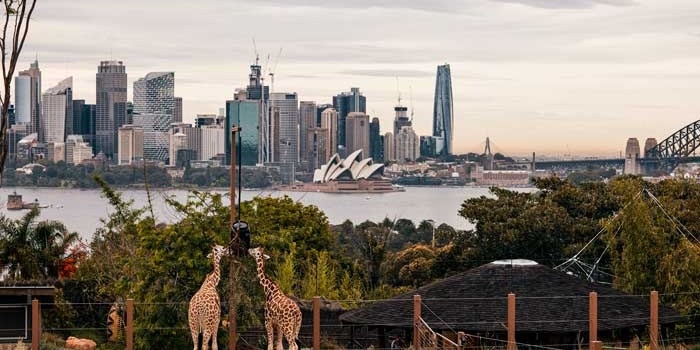
Ensuring there’s enough water in the moat may not be a common challenge for those preparing for changing climate conditions.
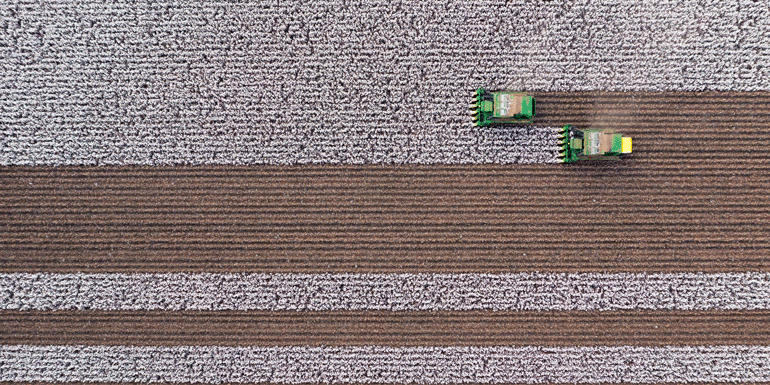
The 2021-22 NSW Intergenerational Report included an assessment of key climate risks for the first time. This required NSW Treasury to develop modelling on climate risks, with the support of climate scientists, and to then translate the information into economic implications.
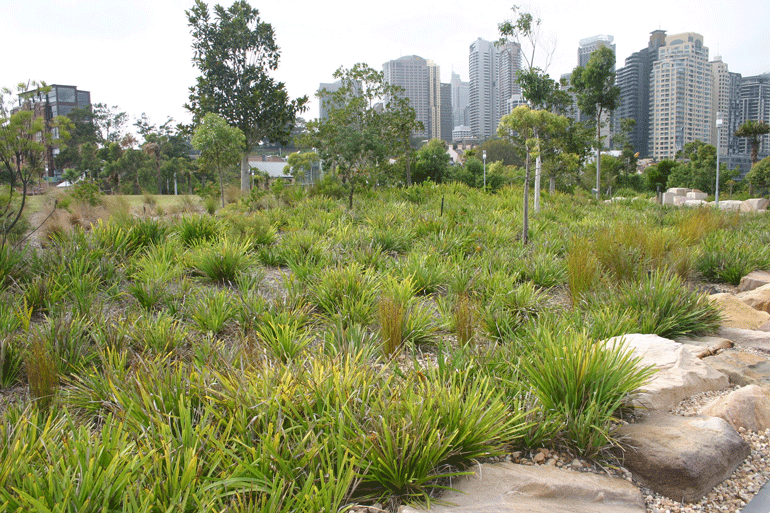
The role of the Greater Cities Commission (GCC) is to coordinate and align the planning that will shape the future of the Six Cities Region. The GCC are using a tool that applies NARCliM regional climate projections to assess the socioeconomic risks of climate change for the region.