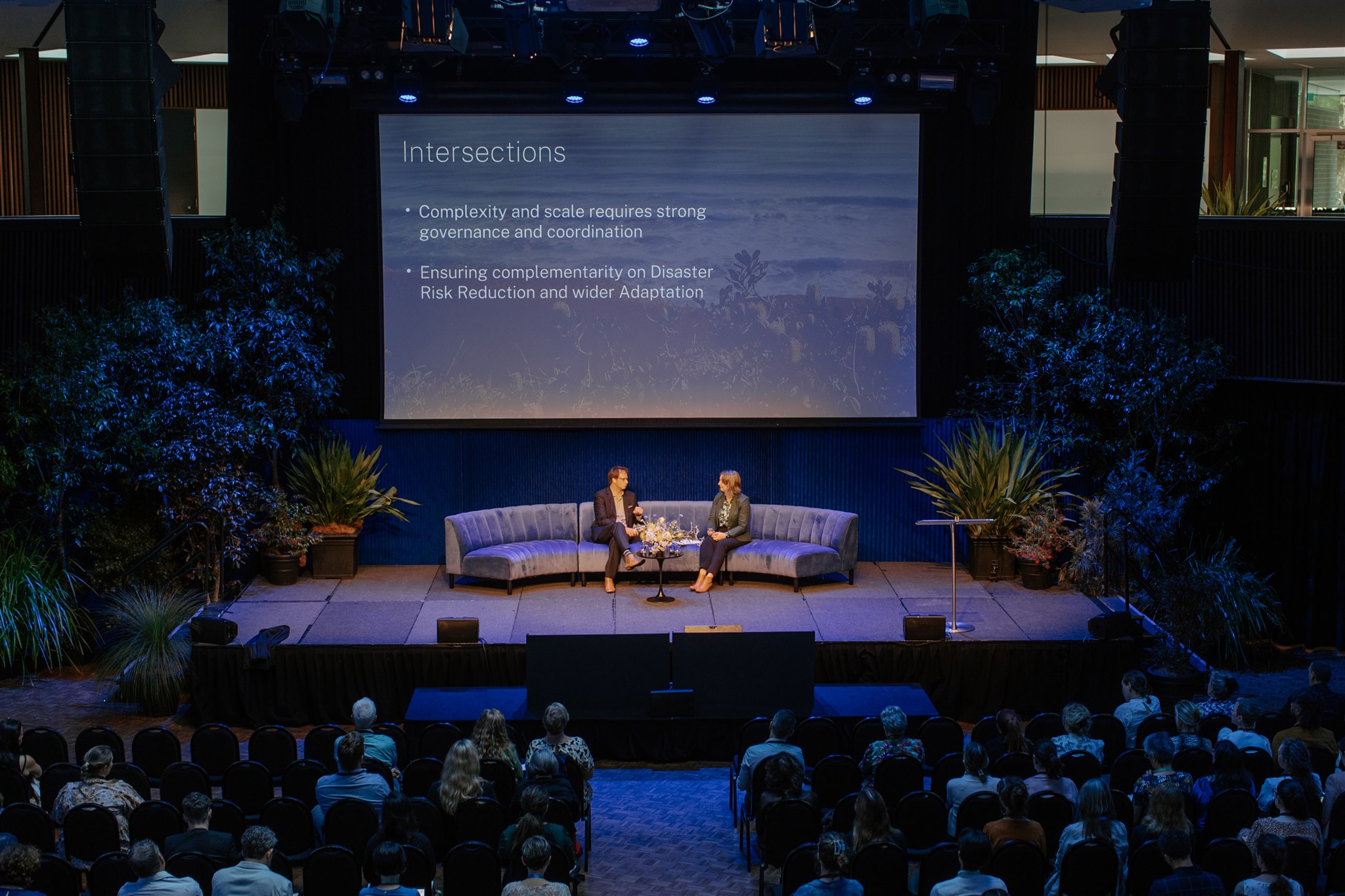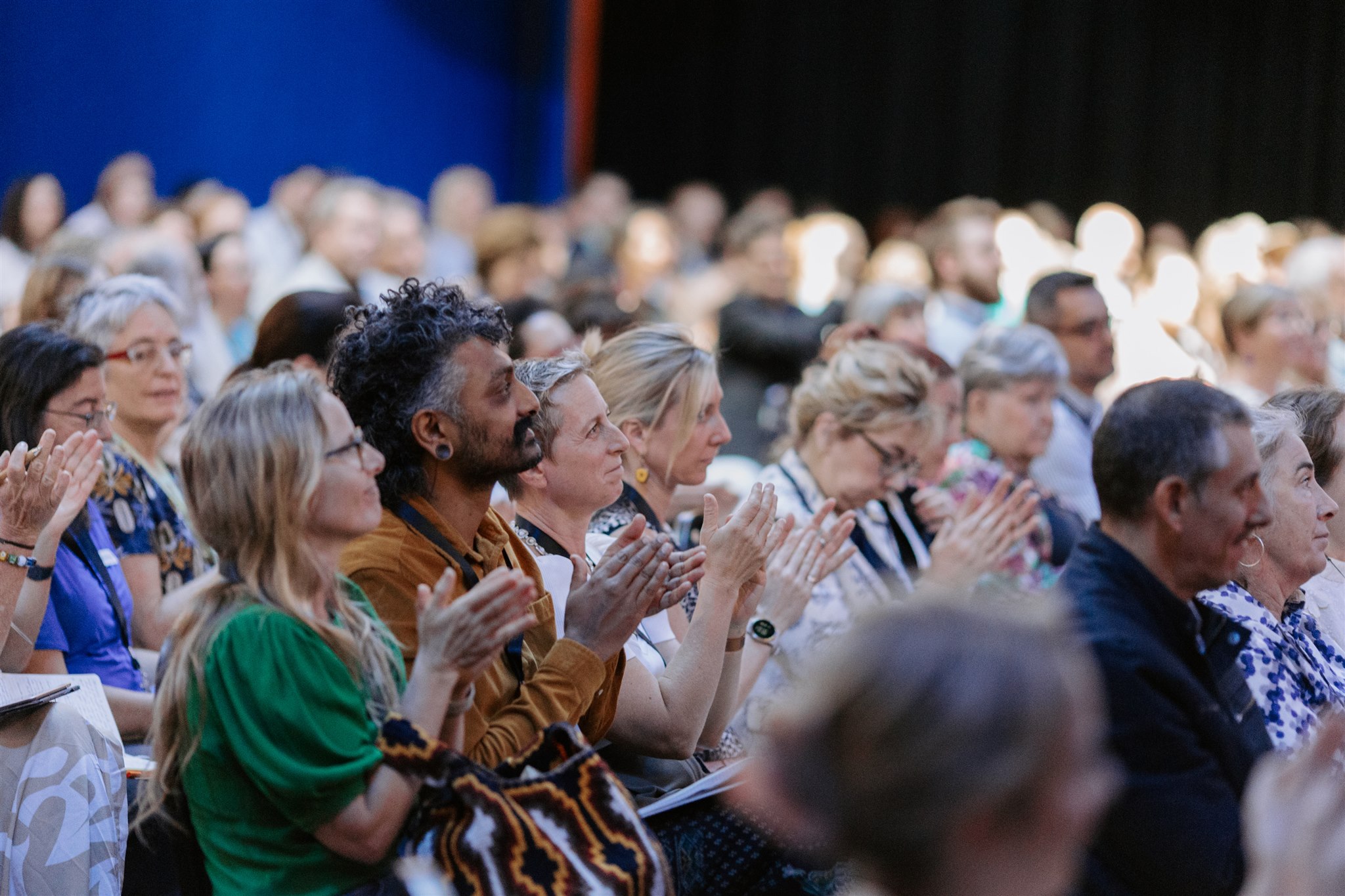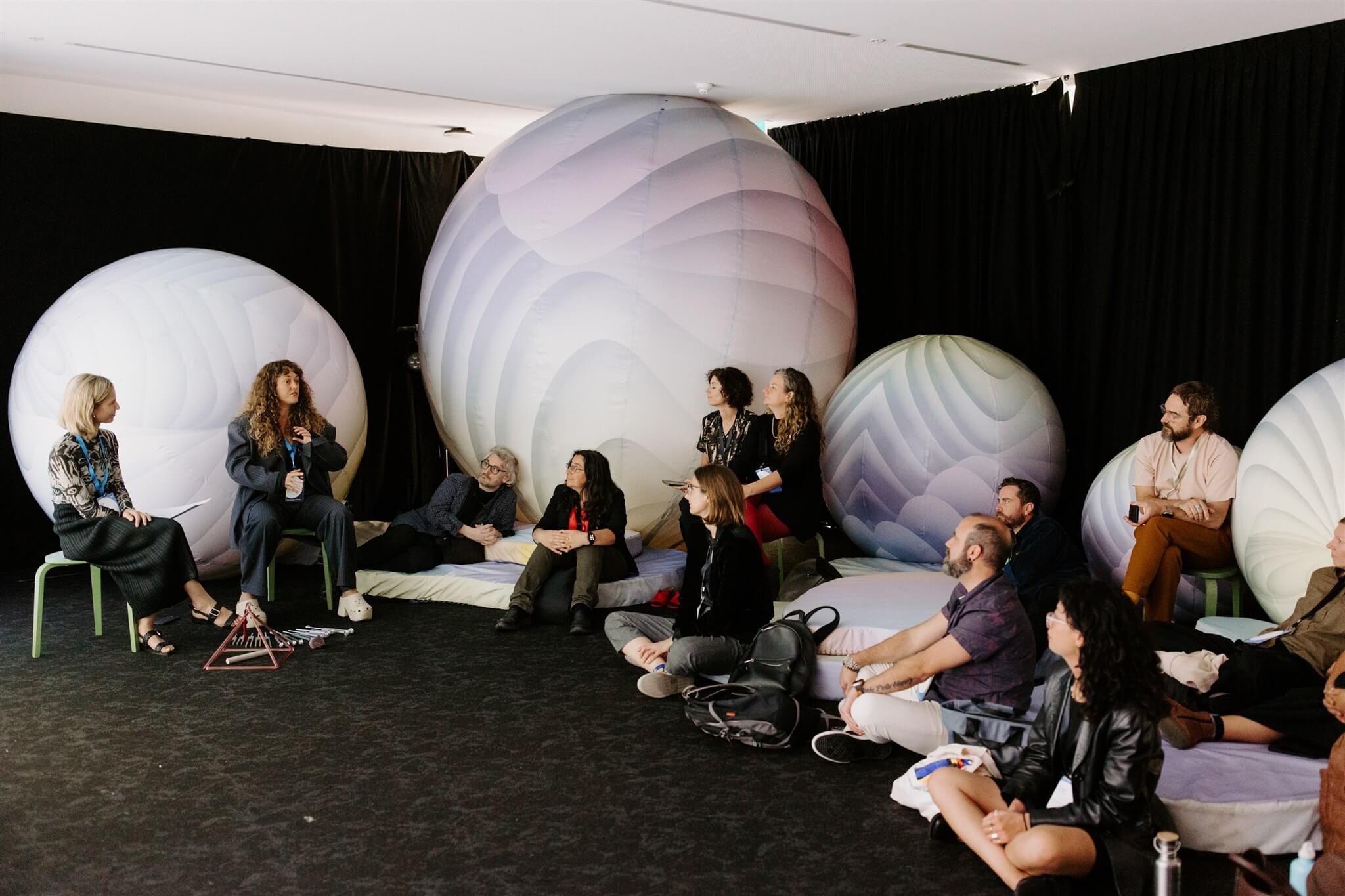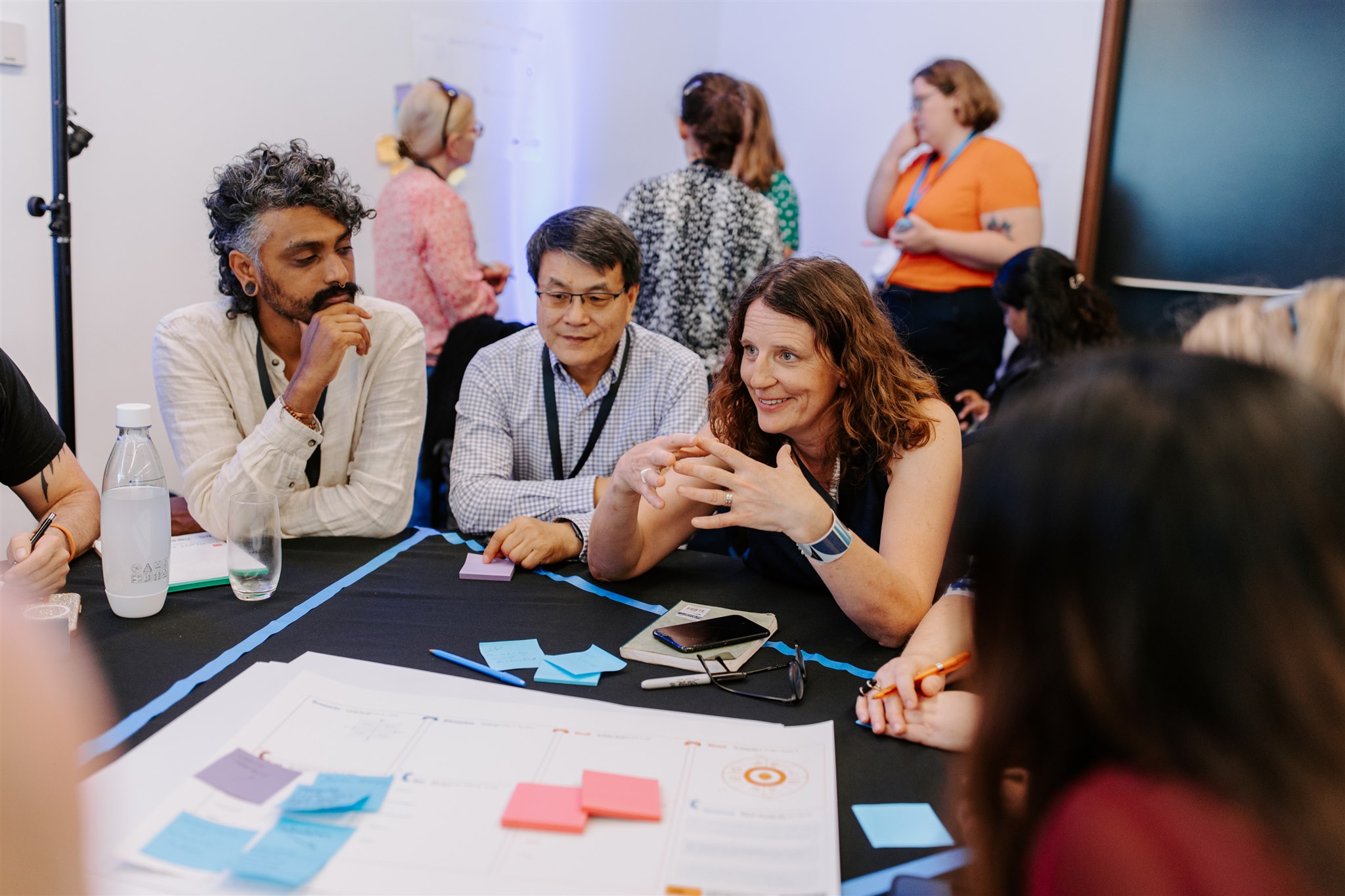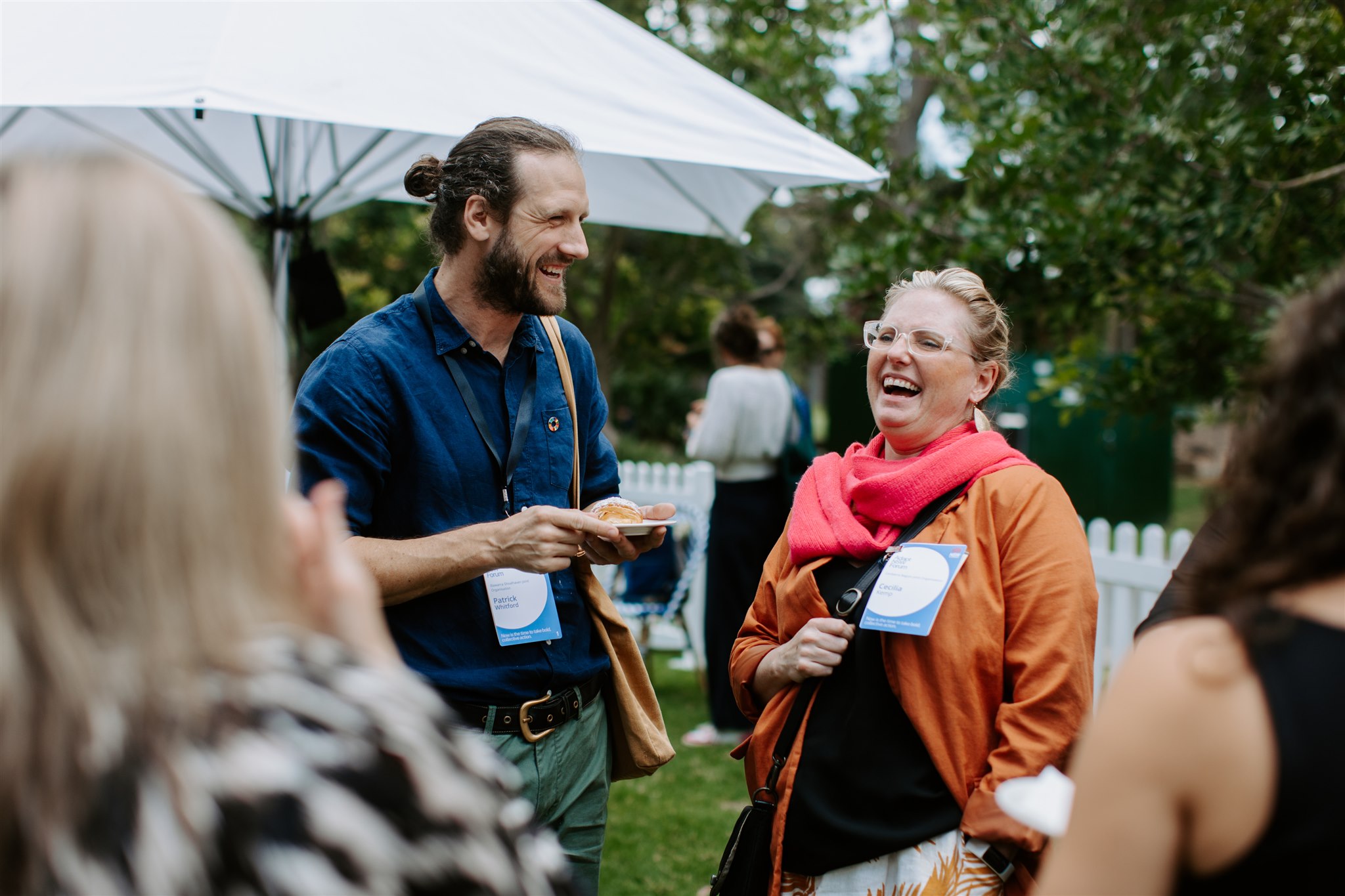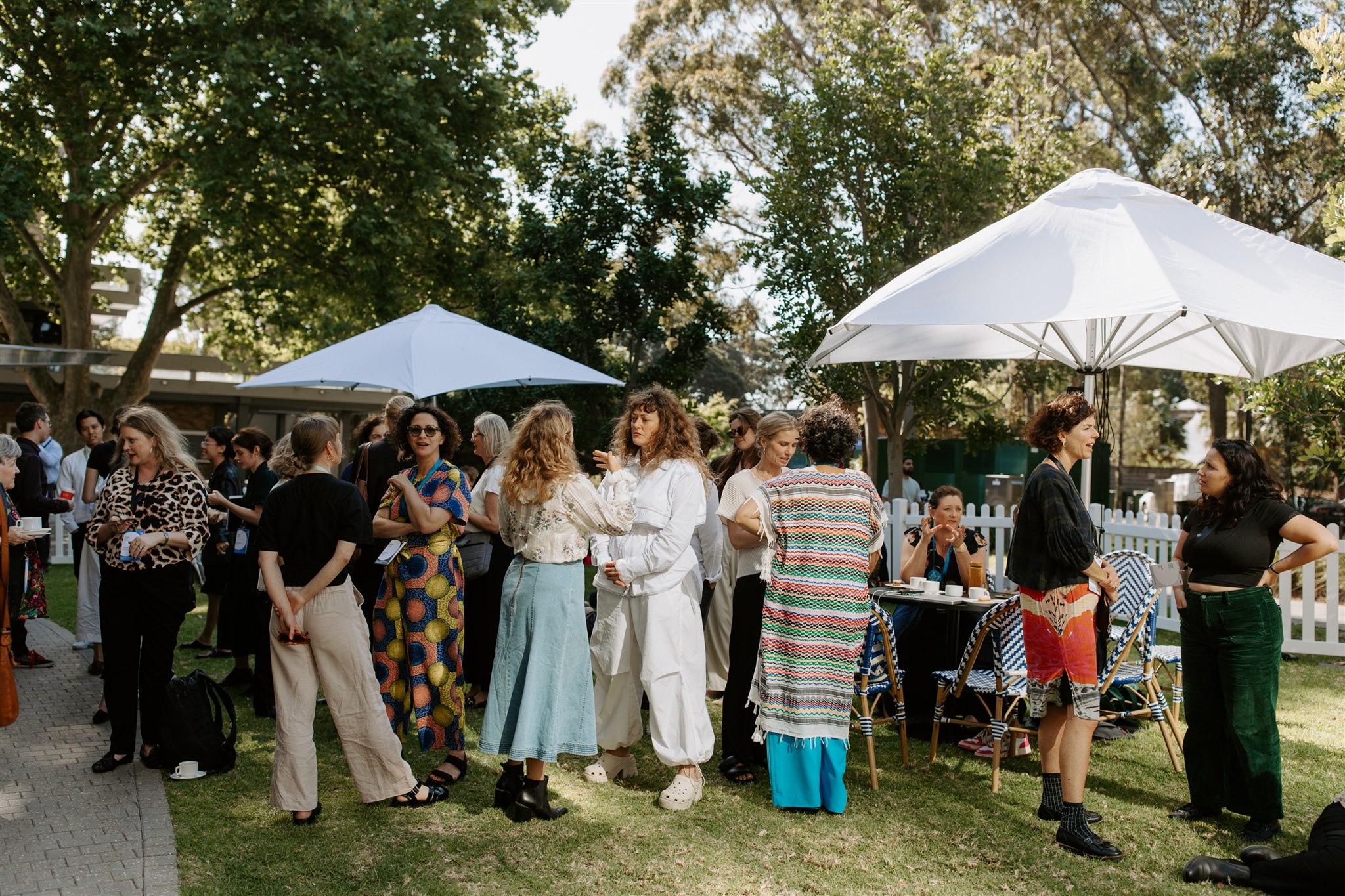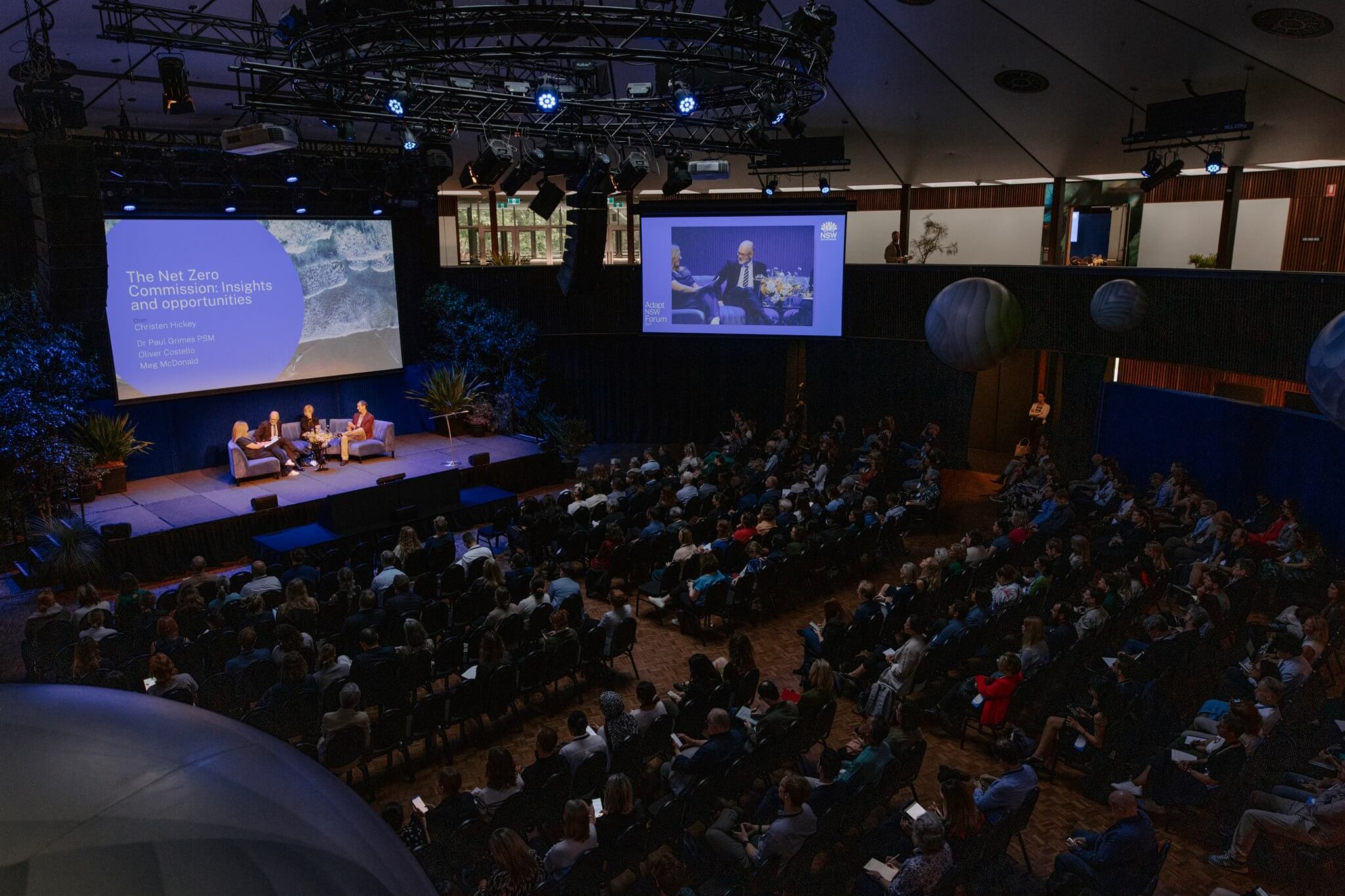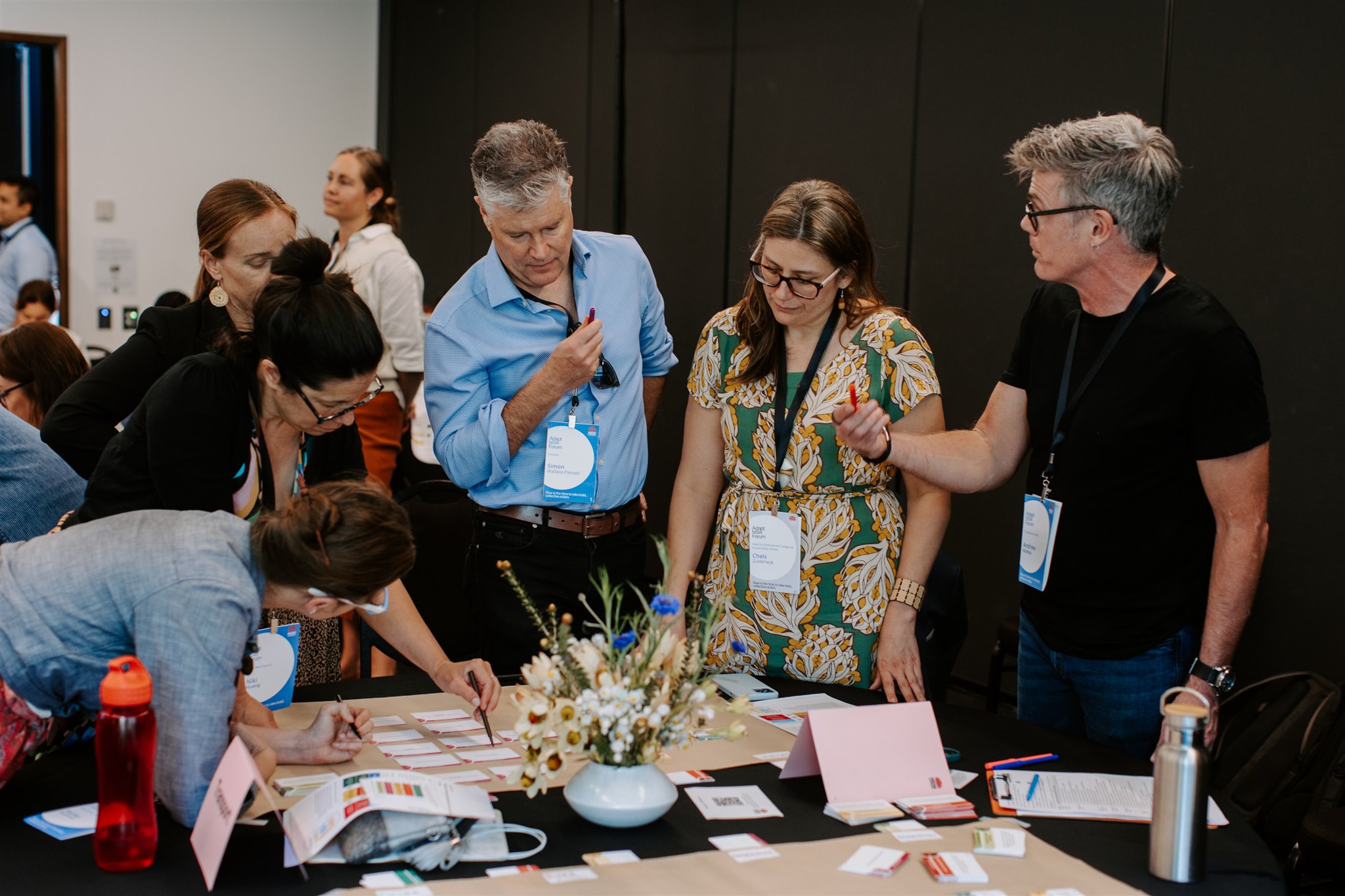
The AdaptNSW Forum 2025 was an exploration of our entangled, complex and interdependent world, and to Other Ways of Knowing, Thinking, Feeling and Doing. To face climate risks, we need to shift from business-as-usual and lead with our humanity. By embracing approaches that recognise how everything is interwoven, we can rethink our values, systems and actions to build a just and hopeful future.
Transformation begins not by turning away, but by engaging with the darkness. Only then can we create space for regeneration: grounded in care, guided by knowledge, and shaped by right relationship.
Thought pieces and recordings of sessions are available below and the full program can be viewed here.
Thought Pieces
Key insights from the AdaptNSW Forum in 2025
At the AdaptNSW Forum 2025, Indigenous leaders and cultural scientists explored how climate adaptation can draw on multiple ways of knowing, thinking, feeling and doing – inviting a deeper question about our responsibilities to Country and future generations.
Young people have grown up with climate change as a constant presence in their lives. AdaptNSW Forum 2025 challenged the assumption that experience comes only with age.
Buildings shape energy demand, industrial emissions and the resilience of our cities. Rethinking the built environment may be one of Australia’s most powerful climate opportunities, the AdaptNSW Forum 2025 audience heard.
Adapting locally starts globally. Satellites, weather stations and ocean sensors feed the models governments rely on to plan for floods, heat and climate risk.
What if climate action was embedded in pop culture? At AdaptNSW Forum 2025, communicators examined how brand, humour and storytelling could make climate action more visible.
What does it mean to take risk to reduce risk? At AdaptNSW Forum 2025, we explored how cultural knowledge, policy innovation and trust can strengthen climate adaptation.
Recordings Day 1
Amanda Close is a Minjungbul, Githabul and Widjabul Wia-bul woman from the Northern Rivers, NSW, with children connected to Wiradjuri Country. She has over 30 years’ experience across government and non-government sectors, including roles in law and justice, youth services, and as Joint Management Officer of Gulaga National Park. Amanda is now a Cultural Scientist with Conservation and Restoration Science (CaRS) in DCCEEW. Her research explores how environmental elements such as wind and dust intersect with cultural stories of Country, working with the co-founders of DustWatch and using methodologies like Two-Eyed Seeing and cultural mapping. This work is grounded in listening to Country and Spirit.
Speaker:
- Amanda Close
Dr Terri Janke is a Wuthathi/Meriam/Yadhaigana woman and a leading authority on Indigenous Cultural and Intellectual Property. Over 25 years ago, she founded Terri Janke and Company, a pioneering law firm dedicated to empowering Indigenous communities through self-determined legal and business solutions. Her work champions Indigenous knowledge systems and their vital role in caring for Country. Dr Janke invites us to engage with Other Ways of Knowing, Thinking, Feeling, and Doing – centering respect, reciprocity, and interconnectedness. Her leadership offers a powerful lens for reimagining climate adaptation through justice, culture, and collaboration. She was also a co-author of the State of the Environment Report 2021.
Speaker:
- Dr Terri Janke
What does it mean to build a society in right relationship, with the body, the land, place, and one another?
In this keynote, multidisciplinary artist, educator, and systems thinker Melissa Gilbert aspires to seed a new paradigm inviting us into a design conversation grounded in reciprocity, creativity, repair, and repatterning. Drawing from her Manifesto and Methodology within UnitePlayPerform living studio, she maps how embodied practice, material innovation, and cultural imagination can become tools for regenerative governance and climate adaptation.
This is not just a talk, it’s a guided journey of living inquiry into how beauty, ethics, and right relationship can form the living architecture of a good society.
Speaker:
- Melissa Gilbert
This session will explore how the NSW DCCEEW Applied Bushfire Science Program is embedding Aboriginal knowledge systems in the Care and Repair of Country and Aboriginal cultural landscapes. Through a film screening and discussion, it will provide an overview of the program’s development and its approach to successfully integrating cultural knowledge holders into fire planning and risk management in NSW.
Speakers:
- Kat Haynes
- Gregory Summerel
- Mandy Foster
In this session we'll analyse the popular cultural moments of big tech, AI and media in 2025, and try to make sense of the global capacity for climate positive futures.
Speakers:
- Ben Hart
- Ellie Moss
- Catherine Kerr
As climate risks escalate, the ability to access, govern, and apply climate data is becoming a cornerstone of effective adaptation. But who controls this data, and how can we ensure it serves the public good? Recent changes in U.S. data governance and intelligence policy have brought climate data sovereignty into the spotlight. This panel will explore how climate data sovereignty is shaped across global, national and local levels, and explores the governance, coordination and clarity needed to manage shifting responsibilities as data is downscaled and shared across the system.
Speakers:
- Matt Riley
- Anthony Rea
The ongoing NSW DCCEEW Dust, wind and cultural pathways project aims to connect western science and cultural knowledge to improve the outcomes for Country. This session is a campfire-style yarn conveying personal experiences and learnings around this Two-Eyed Seeing project.
Speakers:
- Amanda Close
- Mal Ridges
- Kate Brown
- Stephan Heidenreich
- John Leys
- Stuart Cohen
- Paris Norton
The focus of this panel is on adaptation planning and community engagement processes that directly consider and address human impacts on – and relationships with – the environment. We will share practices for more directly considering impacts on – and interests of – the environment, ecosystems, and animals in the design of adaptation pathways and reveal how these practices can deliver more just outcomes for both people and the environment.
Speakers:
- David Schlosberg
- Scott Lappan-Newton
- Danielle Celermajer
- Emma Whale
- Michele Barnes
- Jaky Troy
Climate risk is often managed by institutions without consistently involving the people who are most impacted and vulnerable. To create more effective and equitable outcomes, we must embed empathy into our processes—using it as a tool to elevate diverse voices and lived experiences in climate adaptation decision-making. This conversation explores how institutions can move beyond consultation to genuine inclusion, using evidence-based, practical approaches that build strong coalitions for change.
Speakers:
- Melinda Hillery
- Peter Swain
- Carmel Reyes
- Aaron Coutts-Smith
Communities know what matters most. How can understanding those values and communicating them to decision makers drive real adaptation at scale? In this session we'll learn practical ways of capturing community values and discuss the disconnect between what communities want and decision-making on the ground.
Speakers:
- Claudine Moutou
- Dan Etheridge
- Catherine Kerr
- Mari Jaervis
Speakers:
- Rebecca McNaught
- Lauren Rickards
- Sarah Boulle
Transforming the built environment offers a powerful opportunity to address both climate adaptation and mitigation. In this session, leading experts will share how they are creating urban environments that are low-carbon, inclusive and adapted to a changing climate.
Speakers:
- Carlos Flores
- Elizabeth Mossop
- Andrew Mackenzie
- Julia Watson
This session invites participants to actively explore how Indigenous knowledge and Western science can be brought together to deepen understanding and response to climate change. Through collaborative activities, participants will apply a Two-Eyed Seeing approach to inform both personal reflection and professional practice.
Speakers:
- Amanda Close
- Paris Norton
- Mal Ridges
- Trent Auld
- Eren Turak
- Michael Drielsma
- Li Xu
- Savrina Carrizo
Young leaders from diverse fields are bringing fresh ideas, urgency, and lived experience to climate action and adaptation. This session will platform youth changemakers as they share their experience and priorities for the future. You’ll also have the unique opportunity to collaborate and be part of youth-led initiatives tackling the issues young people see as most pressing.
Speakers:
- Yehansa Dahanayake
- Ashwini Aravinthan
- Layla Wang
- Kal Glanznig
- Georgina Hughes
- Hannah Fennell
- Sarah Boutchard
- Emily Rowland
- Kirah Godsell
- Jack Rowland
- Oliver Hervir
- India Fox
- Takesa Frank
- Stanley Tanudjala
- Ray Newland
This interactive session helps asset managers and government agencies understand and tackle climate risk. Through presentations, live polling and panel discussions, participants will explore real-world tools, partnerships, and implementation challenges. Networking follows to build connections and share insights, with all attendees leaving feeling more equipped to tackle climate risk within their asset base.
Speakers:
- Matt Adams
- Alice Paul
- Emma Bombonato
- Penny Joseph
- Nidhi Nishant
Victor Steffensen is an Indigenous writer, filmmaker, musician, and a traditional knowledge consultant for land and community wellbeing. He is a descendant of the Tagalaka people from North Queensland. Much of Victor’s work is based on the arts and reviving traditional knowledge values, particularly Aboriginal fire management, with Indigenous communities and non-Indigenous Australians. He is the co-founder of the Firesticks Alliance which involves a large community network across Australia. Victor holds an Honorary Doctor of Science through James Cook University. He is the author of the book, Fire Country, and the children’s book, Looking After Country With Fire, Animals on Country and Trees. Through his artistic label Mulong, Victor has published music tracks and videos such as ‘Great Land’, and ‘Cool Burning’.
Julia Watson is the author of Lo—TEK: Design by Radical Indigenism and Lo—TEK Water, A Fieldguide for TEKnologists, and a leading expert in Indigenous, nature-based technologies, with which she is a pioneer of the global Lo—TEK movement. She is the co-founder of the Lo—TEK Institute, which advances generational wisdom through nature-based education and advocacy, and is co-lead of the Lo—TEK Office for Intercultural Urbanism, a design studio exemplifying the emerging field she has envisioned as TEKnological Urbanism—an approach to city-making grounded in Traditional Ecological Knowledge, reciprocity, and intercultural co-design. She is a visiting lecturer at Harvard University GSD in Fall 2026.
Recordings Day 2
Where "bold action" has been called for and "business as usual" has been identified as a driver of our unacceptable risk exposure, a recurring challenge in long term adaptation is navigating risk averse decision-making and work cultures. This panel discussion will focus on how we can create environments where innovation can thrive, decision-makers can feel supported in taking risk, and where we have a greater understanding that not taking bold action is far more risky than a stumble along the way.
Speakers:
- Ben Hart
- Dan Etheridge
- Oliver Costello
- Ingrid Emmery
Yehansa Dahanayake is a passionate climate advocate, high school student and Youth Researcher at the Young & Resilient Research Centre at Western Sydney University, with a special interest in child and youth engagement, human rights, and climate change policy. Her roots are in grassroots advocacy, having volunteered at the Australian Youth Climate Coalition for multiple years. In partnership with Environmental Justice Australia, she recently became one of the first Australian young people to file an official complaint to the UN Special Rapporteur on Climate Change. Yehansa also works as a public speaker, wishing to share her optimistic, solutions-based, and interdisciplinary view on climate adaptation and solution-making. When she's not doing climate work, she loves to paint, write songs, sing, and dance!
Small to medium sized enterprises are the backbone of NSW’s economy - yet they face a polycrisis of climate shocks, volatile supply chains, rising costs, skills shortages, digital disruption and compliance pressures. This session unpacks the recent AdaptNSW Business Transformation Project on how regional businesses and communities can shift from reactive survival to proactive, system-aware, vibrant transformation.
Speakers:
- Reece Proudfoot
- Gaye White
- Jeff Aston
- Belinda Morrissey
This dynamic workshop disrupts conventional climate narratives by exploring climate change as a deeply cultural phenomenon—inviting participants to expand scientific boundaries, challenge embedded values, and co-create new understandings grounded in relationship, responsibility, and lived experience.
Speakers:
- Paris Norton
- Mal Ridges
Climate change is already disrupting lives, affecting communities, straining service delivery, and entrenching existing injustices and disadvantage. Yet those most exposed, and the services that serve them, are already responding: adapting to impacts, leading local solutions, and identifying what’s needed. As the community sector responds to climate change now in real time, this session is a call to act together so that no one is left further behind in a changing climate.
Speakers:
- Melinda Hillery
- Thuy Linh Nguyen
- Jesse Taylor
- Naef Qassis
This session will look at how NSW DCCEEW is engaging on the international stage to demonstrate our leading role in the adaptation conversation and continuing to learn from other jurisdictions. The Commonwealth DCCEEW will provide an overview of the Federal Government's newly released national risk assessment and adaptation plan, and discuss - what happens next?
Speakers:
- Lisette Collins
- Danielle Thomson
- Sophie Henshaw
Adaptation finance is evolving, and NSW can learn from what’s emerging globally. This session explores new approaches like climate-aligned budgeting, resilience bonds, nature-positive investment and community-led funding. Hear how international shifts in thinking are opening up new possibilities and consider how NSW might apply these insights to support smarter, fairer adaptation planning.
Speakers:
- Tiffany Correggia
- Linda Romanovska
- Stella Whittaker
- Kate Simmonds
In this hands-on workshop, Liz Keen will guide participants through the process of designing a podcast concept tailored to a specific community. While particularly valuable for those considering launching a podcast, the workshop will also offer practical insights applicable to social media strategy, marketing campaigns, and preparing to be an effective guest on existing shows.
Speaker:
- Liz Keen
This session will introduce the NSW Coastal Erosion and Inundation Assessment 2025, a state-wide project delivering the most comprehensive and up-to-date datasets to support climate adaptation across coastal communities. The session begins with an overview of the project and a presentation, outlining how new datasets, methodologies, and mapping products enhance understanding of coastal hazards under current and future climate scenarios. This will be followed by a panel discussion, featuring experts from across government, academia, and industry to explore how this information can be applied for adaptation planning, risk assessments, and coastal management programs.
Speakers:
- Tracey MacDonald
- Danial Khojasteh
- Marc Daley
- Philip Haines
- Michael Kinsela
- Polly Mitchell
- Iyanoosh Reporter
To raise awareness of food security in NSW, and how climate change may change what we eat. Climate change, extreme events, biosecurity risks, and supply chain fragility are exposing vulnerabilities in our food systems. This session will explore how farmers, researchers, and government are responding with innovation, agtech and data, and resilience-building strategies.
Speakers:
- Jessica Fearnley-Pattison
- Rebecca Reardon
- Jason Alexandra
- Brooke Sauer
- Tom Ward
- Clare Edwards
- Ailie Webb
- Jane Kelley
Explore how nature repair can be designed to survive under a changing climate. This session brings together experts sharing practical strategies and scientific insights - from managing climate risks in restoration planning and communities leading the way in climate-ready revegetation, to leveraging genetic diversity and innovative webtools for resilient ecosystems. Join us to learn how science and collaboration are shaping restoration for a climate-resilient future.
Speakers:
- Maurizio Rossetto
- David Rissik
- Renee Borrow
- Sonya Duus
- Gill Hall
- Michelle Dawson
As NSW transitions to a low-carbon economy, it must address both mitigation and adaptation to effectively manage climate-related risks and opportunities. This session will showcase expert insights and practical strategies for integrating adaptation into transition planning.
Speakers:
- Olivia Kember
- Nick Wood
- Tiffany Correggia
Climate change is intensifying extreme weather events, driving more frequent and severe bushfires, floods, and heatwaves across New South Wales. These hazards are no longer future threats; they are here now, reshaping lives, landscapes, and livelihoods. In this panel session, leading experts will explore how the intensity and frequency of these climate extremes are projected to change by mid and end of century, drawing on the latest data from the NSW and Australian Regional Climate Modelling (NARCliM) project.
Speakers:
- Matthew Riley
- Stephen White
- Joseph Miller
- Matthew Adams
- Simon Heemstra
- Bethany Ellis
- Sarah Tasic
- Kataya Barrett
- Rebecca Dawson
- Judith Bruinsma
- Simon Parsons
Andy Marks is Founder and Director of the new Symbiocene Institute which helps organisations decarbonise, become nature positive and more resilient using their innovation driving symbiosis-based principles. Sharing best practice and new thinking, the Institute is building a global community of Symbiocene adopters working in partnership with the natural world.
Paris Norton is a Gomeroi, Ngāti Kahungunu ki Wairarapa, Ngāi Tūmapūhia-ā-Rangi, and Ngāti Te Ātiawa woman from Gunabarabin (Coonabarabran), at the foothills of the Warru-bun.gal (Warrumbungle) ranges in north-western NSW, and the eastern and southwestern coasts of Te Ika-a-Māui (North Island), Aotearoa, New Zealand.
With over 15 years of experience, Paris has worked in partnership with Aboriginal and Torres Strait Islander communities to support cultural, creative, and educational aspirations through grassroots initiatives, state-wide collaborations, national collecting institutions, and government programs. She is currently a Cultural Scientist in the Conservation and Restoration Science (CaRS) branch at the Department of Climate Change, Energy, the Environment and Water (DCCEEW), where she brings cultural knowledge systems, practices, values, and spirituality into meaningful dialogue with environmental science.
Speaker:
- Paris Norton
Highlights from the AdaptNSW Forum 2025
Other Ways
With the overarching theme of Other Ways, the four Forum sub-themes explored the work being done to shift from the status quo to tackle the climate crisis: Other Ways of Knowing, Feeling, Thinking and Doing.
Knowing invites us to embrace multiple ways of making sense of the world, including through Traditional Ecological Knowledge and ancestral wisdom. These ways of knowing reconnect us to nature and ourselves, and explore what is possible when we embrace a wide range of knowledge systems and put them side by side, in dialogue, with mutual respect.
Thinking explores the latest innovations in adaptation science and encourages new ways of engaging with climate risk and opportunity. Through examining the systems that make up our complex world, we can continue to widen the circle of what is considered valuable and move beyond the status quo.
Feeling centres emotion, connection, and care as vital to climate action. It honours our deep ties to Country and each other, recognising that what we feel shapes what we care about, and how we choose to act.
Doing explores adaptation in practice, making change on the ground to transform the world and bring climate solutions to life. This includes through partnerships between science and traditional knowledge holders, tailored local responses, storytelling, play, gamification, and making.
Have a question?
We'd love to hear from you.
If you have any questions about the 2025 event, please contact us.