Key points
- Biodiversity is the variety of all life on Earth, including animals, plants, and microorganisms.
- Many impacts of climate change affect biodiversity, in particular, warming temperatures and changes to rainfall patterns.
- Loss of biodiversity can lead to land degradation, effects on water supply and changes in farming productivity.
- Many plants and animals cannot adapt to the effects of climate change. NSW has 1,000 plant and animal species and ecological communities that are at risk of extinction.
- Managing our biodiversity is an important way to prevent further biodiversity loss and extinctions.
The importance of biodiversity in NSW
Biodiversity is the variety of all living organisms on Earth. Diversity can refer to:
- genetic diversity
- species diversity – including plants, animals, fungi, and microorganisms
- ecosystem diversity.
Australia is home to more than one million species of plants and animals. Many of these are found nowhere else in the world, including 82% of our mammals and 93% of our frogs.
Biodiversity drives the natural systems that support all life on the planet. This life provides us with clean air and water, food, and natural resources. Also, biodiversity increases the ability of ecosystems to do things like:
- hold soils together and maintain soil fertility
- deliver clean water to streams and rivers
- cycle nutrients
- pollinate plants (including crops)
- protect us against pests and diseases.
These are sometimes called ‘ecosystem functions’ or ‘ecosystem services’.
Biodiversity contributes to the beauty and cultural identity of NSW and Australia on a whole. Spending time in nature is linked to our health and wellbeing.
How biodiversity is affected by climate change in NSW
Biodiversity is affected by every aspect of climate change, including:
- warming temperatures
- changes to rainfall patterns
- more frequent and intense droughts
- catastrophic bushfires, storms, and heatwaves
- sea level rise
- changes in ocean currents and water temperatures
- estuary and ocean acidification.
In the past 200 years, the Australian environment has been modified dramatically. In NSW, 1,000 plant and animal species and ecological communities are at risk of extinction.
A climatic envelope is the range of temperature, rainfall, and other climate conditions in which a species can survive. When a climatic envelope changes, species must:
- evolve or adapt to the changes
- migrate to another area that has a similar climatic envelope.
For example, species that can grow quickly and reproduce frequently, such as microorganisms and some invertebrates, may be able to adapt or evolve in response to changes in their climatic envelope. Some animals, including some birds and marine animals, can more easily migrate than others, enabling them to move to more suitable habitats as the climate changes.
But many Australian species can only cope with a narrow range of conditions – that is, they have small climatic envelopes. If they cannot migrate or adapt, their existence becomes threatened. For example, the specific conditions needed for a species to survive, such as a cloud forest, may no longer be present.
When species migrate or disappear due to climate change, it can change the food web. For example, some species that cannot migrate – such as plant species – may become vulnerable to predation by a new insect species in that area. Animals that previously relied on that plant species – perhaps for food or shelter – are then also affected. If those animals were a food source for another species, then that species become affected, and so on.
Changes at lower levels of a food web can have cascading effects throughout the entire ecosystem.
A loss of species could reduce ecosystem services. This is especially true if the environment is changing quickly. As the climate changes and species are eliminated from certain areas, we could see a change in some ecosystem services. This could result in:
- more land degradation
- native species being replaced with introduced plants and animals
- changes in agricultural productivity
- lower-quality water, including drinking water.
Adapting to changes in biodiversity in NSW
In many cases, biodiversity cannot keep up with and adapt to the speed that the environment is changing. Without management intervention, this will lead to local or more widespread extinctions.
To adapt to climate change and preserve biodiversity, we need to have:
- resilient ecosystems, to reduce the stress caused by other human activities such as pollution and land clearing
- interventions for priority species
- identification and protection of climate refuges where species are likely to persist
- habitat connectivity to allow species movement
- community involvement in conservation science-based tools for land management such as Restore and Renew and NSW Flora: Ecological Niche Finder.
Alongside action to reduce the extent and impacts of climate change, programs such as the Saving our Species program and those led by the NSW National Parks and Wildlife Service are helping to protect our species from climate change. To help biodiversity and wildlife managers consider climate change in their planning, adaptation guidance is available on the climate-adapted conservation page, and other climate-adapted environmental management pages.
Australia's Strategy for Nature 2019–2030, and the accompanying Australia’s Nature Hub website, is the national biodiversity strategy and action plan.
More broadly, the NSW Government is taking action on climate change through multiple pathways, including the Climate Change (Net Zero Future) Act 2023, the NSW Climate Change Adaptation Strategy and the NSW Climate Change Adaptation Action Plan 2025–2029.
Related information
Saving our Species - NSW Department of Planning Industry and Environment
Conservation and Heritage - NSW National parks
About biodiversity - NSW Department of Planning Industry and Environment
Climate change and biodiversity - Australian Academy of Science
Case studies

What if the future begins with a new word? The Symbiocene offers a practical philosophy for designing relationships where people and nature thrive together.

On the New South Wales South Coast, a project bringing Aboriginal cultural custodians into the bushfire emergency control room is reshaping how decisions are made under pressure.
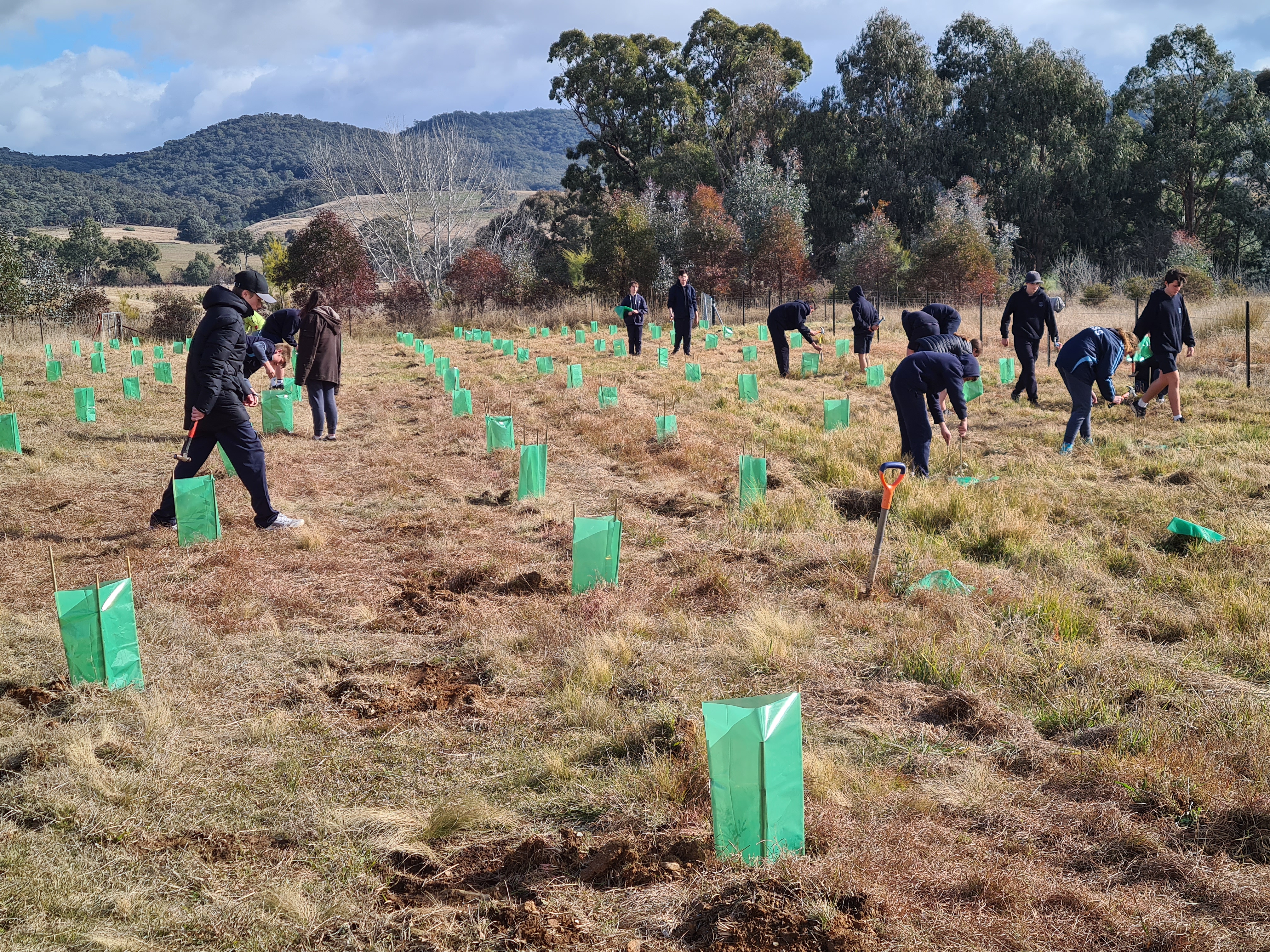
The Yass Area Network of Landcare Groups is is using the Restore and Renew webtool to guide seed selection for their Climate Ready Revegetation Project.